
What a Water Feature Contractor Brings to Your Property That a DIY Kit Never Will in Macomb, MI
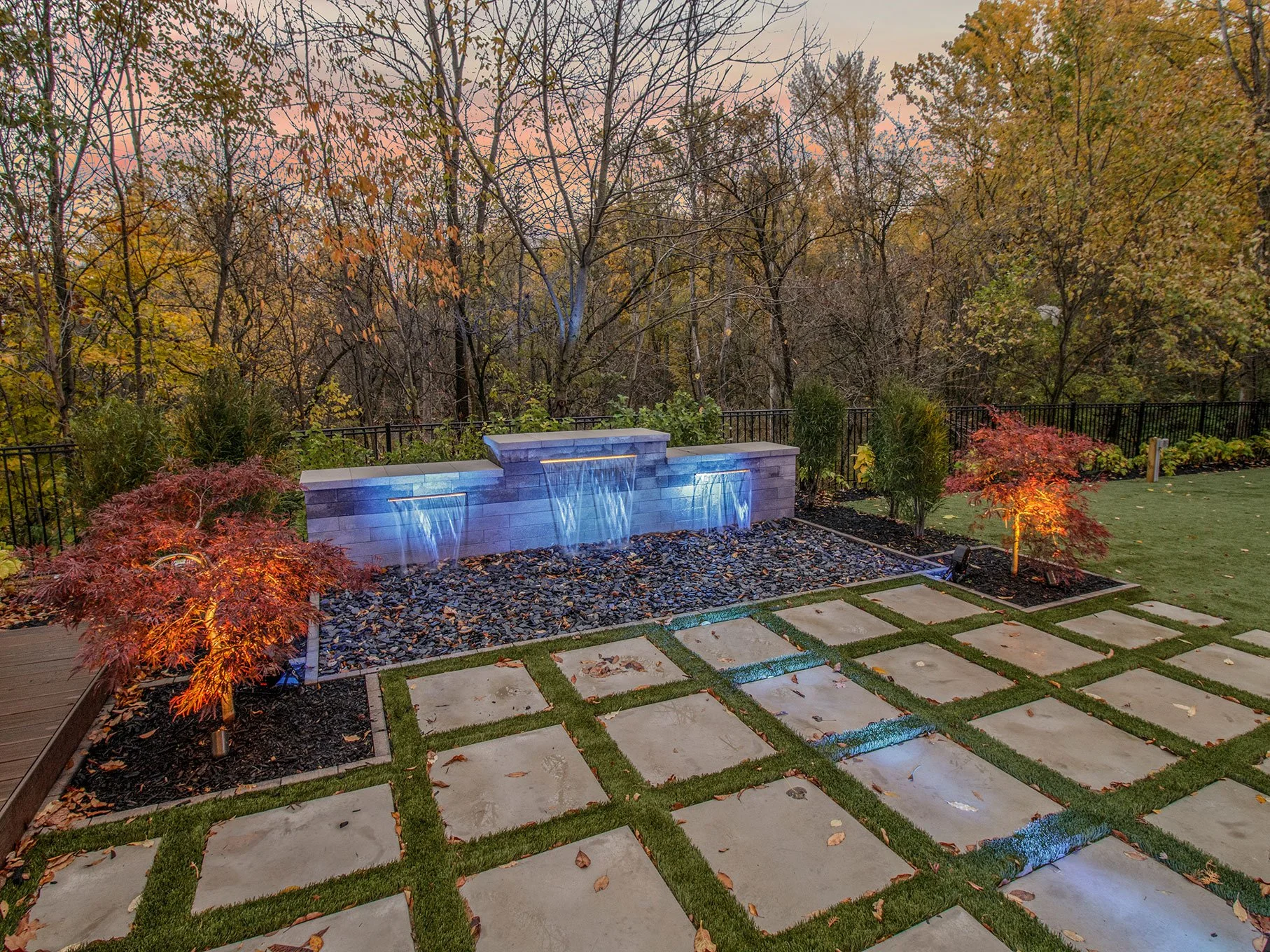
There is a version of a backyard water feature that comes in a box. It arrives flat packed with a small pump, a plastic basin, a few pieces of faux stone, and a set of instructions that promise a weekend project. And for some homeowners, that is enough. A small fountain on the patio. A trickle of water near the garden bed. Something pleasant that adds a little background sound.
Then there is the version that is designed for the property, built into the landscape, and constructed with materials and systems that look natural, perform reliably, and last for years without the constant fiddling that the boxed version demands by month three.
That is the difference between buying a water feature and hiring a water feature contractor who builds one.
Why the Contractor Matters as Much as the Feature
Water is one of the most compelling elements you can introduce into a landscape. It adds sound, movement, light, and life in a way that no hardscape or planting can replicate. But it is also one of the most unforgiving. A water feature that leaks, clogs, runs dry, grows algae, or stops circulating becomes a liability instead of an asset. And the line between those two outcomes is almost always the quality of the installation.
A water feature contractor who understands how water behaves in a landscape, how it interacts with stone, soil, plumbing, and electricity, and how the local climate affects everything from evaporation rates to freeze thaw cycles, builds features that perform. A contractor who treats water features as an add on service, something bolted onto a patio project without a dedicated design, builds features that create problems.
In Oakland and Macomb counties, where the properties range from compact suburban lots to expansive estates with significant grade changes and mature tree canopy, the site conditions shape the water feature in ways that demand real expertise. There is no generic solution. Every installation is specific to the property.
The Design Phase Is Where the Feature Comes to Life
Before any stone is placed or any pipe is run, the water feature contractor needs to understand the site, the homeowner's vision, and how the feature will relate to the rest of the landscape.
This starts with a series of questions that go beyond what type of feature do you want:
Where will the feature sit in relation to the patio, the pool, the seating areas, and the primary sightlines from inside the house? A waterfall that faces away from the patio loses its impact. A fountain positioned where it cannot be heard from the most used outdoor space misses the point.
What is the grade doing? Slopes create natural opportunities for cascading water, stream beds, and multi level features that would look forced on a flat lot. A flat property may benefit more from a bubbling boulder, a reflecting pool, or a pondless waterfall that creates sound and movement without requiring a grade change.
How does the sun move across the site? A water feature in full afternoon sun will experience more evaporation, more algae pressure, and more temperature fluctuation than one in partial shade. These factors affect pump sizing, water volume, and maintenance requirements.
What is the surrounding landscape? A water feature framed by native plantings and natural stone reads differently than one set into a formal paver patio. The materials, the scale, and the style of the feature need to match the environment it sits in.
How does the homeowner want to interact with the feature? Some want the sound of falling water as a background element while they sit on the patio. Others want a focal point that draws people toward it. Others want a feature their kids can touch, step on, or play near. Each of these goals leads to a different design.
These are the conversations that separate a water feature contractor from a landscaper who happens to install water features. The design phase is where the feature becomes specific to the property and the homeowner, not generic.
Types of Water Features and What Each One Does
The term water feature covers a wide range of installations. Understanding the options helps homeowners make decisions that match their expectations, their maintenance tolerance, and the character of their outdoor space.
Pondless waterfalls are among the most popular residential water features in this region. Water flows over a series of rocks, cascading into a concealed underground reservoir rather than a visible pond. The pump recirculates the water continuously. The result is the sound and visual of a natural waterfall without the open water surface, which eliminates concerns about safety, mosquitoes, and the maintenance demands of a full pond ecosystem. For families with young children or homeowners who want sound and movement without the commitment of a pond, pondless systems are often the best fit.
Bubbling boulders and fountain rocks are the most compact option. A single stone or a cluster of stones is drilled to allow water to bubble up from the center and flow down the surface into a hidden basin below. These features work well in small spaces, near entryways, and as accent elements within a larger landscape. They are low maintenance, visually striking, and provide the calming sound of water without requiring significant space or infrastructure.
Streams and creek beds create a linear water element that follows the natural grade of the property. When designed well, they look like they have always been there, winding through the landscape with natural stone edges, native plantings along the banks, and gentle cascades where the grade drops. Streams connect different areas of the landscape and create a sense of movement and discovery that static features cannot achieve.
Formal fountains and reflecting pools suit properties with a more architectural or structured landscape style. These features are geometric, clean lined, and often paired with symmetrical plantings and hardscape. They work particularly well in front yard or entry court applications where the goal is to create a sense of arrival and elegance.
Ponds with waterfalls are the most immersive option. They create a full aquatic ecosystem with fish, plants, and biological filtration. They require the most maintenance but deliver the most reward in terms of wildlife attraction, visual depth, and the living quality they bring to the landscape. For homeowners who want to engage with their water feature on a daily basis, a pond is the most compelling choice.
A water feature contractor with experience across all of these types can guide the homeowner toward the option that best fits the site, the budget, and the lifestyle.
Related: From Concept to Dive-In: What Pool Companies Offer Royal Oak & Birmingham, MI, Homeowners
What Michigan's Climate Demands From a Water Feature
Southeast Michigan's climate adds a layer of complexity that water features in milder regions do not face. The freeze thaw cycle is aggressive. Winter temperatures drop well below freezing for extended periods. And the transition from winter to spring can be abrupt, with rapid thaws that create water movement and soil shifting that affect everything in the landscape.
A water feature built for this climate needs to account for winterization. Pumps are removed or shut down before the first hard freeze. Lines are drained or blown out to prevent cracking. Pondless basins are designed with adequate volume to handle the expansion and contraction of water in the reservoir. And the stone work and plumbing are installed in a way that allows the feature to be restarted in spring without rebuilding the system.
Properties in Bloomfield Hills, Birmingham, Rochester Hills, Troy, and West Bloomfield Township that invest in water features expect them to look as good in May as they did the previous September. That requires a water feature contractor who builds with Michigan's winters in mind, not as an afterthought but as a core part of the design. It also requires a spring startup process that includes inspecting all connections, cleaning the basin and stone surfaces, testing the pump, and verifying flow rates before the feature is brought back online for the season. A feature that was winterized properly and reactivated carefully will look and sound exactly the way it did when it was first installed.
The Plumbing and Electrical Nobody Sees
The visual appeal of a water feature gets all the attention. The stone. The water flow. The way it catches the light. But the systems underneath are what make it work.
Every water feature requires a pump sized for the flow rate and the head pressure of the system. A pump that is too small will not deliver enough water to create the visual and auditory effect the homeowner expected. A pump that is too large will create turbulence, splash water out of the feature, and waste energy.
The plumbing layout determines how water moves through the system. In a pondless waterfall, the plumbing runs from the underground vault to the top of the falls, where it discharges through a spillway or weir. In a stream, the plumbing may include multiple return points to ensure consistent flow along the entire length. In a fountain, the plumbing is typically self contained within the basin.
Electrical work connects the pump, and in most cases the landscape lighting, to a dedicated circuit. Underwater and perimeter lighting transforms a water feature from a daytime element into a nighttime centerpiece. The way light interacts with moving water creates reflections, shadows, and depth that are difficult to achieve with any other landscape element.
A water feature contractor manages all of this, the pump selection, the plumbing design, the electrical routing, and the integration with the lighting plan, as part of the installation. None of it is visible when the feature is finished. All of it determines whether the feature performs the way it should.
The Feature Should Feel Like It Was Always There
The best water features do not look built. They look found. The stone appears natural. The water flows as if it always has. The plantings around the feature blend into the surrounding landscape without a hard edge between the feature and the yard.
That quality does not happen by accident. It happens when the water feature contractor designs the feature as part of the landscape, selects stone that matches the region, and places every boulder, every gravel bed, and every plant with intention.
In neighborhoods across Birmingham, Bloomfield Hills, and the communities that define Oakland and Macomb counties, the homes are built to a standard. The landscapes should meet that same standard. A water feature that looks like a kit was assembled in the corner of the yard pulls the entire property down. A water feature that was designed for the site, built with natural materials, and integrated with the surrounding hardscape and plantings elevates everything around it.
What a Water Feature Adds That Nothing Else Can
There are practical arguments for water features. They mask ambient noise from roads and neighbors. They attract pollinators and songbirds. They create microclimates that cool the immediate area during summer. They add measurable value to a property in a market where outdoor living is increasingly expected.
But the real argument is simpler than that.
A water feature changes how the backyard feels. It introduces something that moves. Something that sounds different in the morning than it does in the evening. Something that catches the light at angles the homeowner did not expect. Something that draws the eye, holds attention, and makes the outdoor space feel more alive than it did before.
No patio does that. No fire feature does that. No planting bed does that. Water does something different. And when a water feature contractor builds it with the same level of care and craftsmanship that went into the rest of the landscape, it becomes the element the homeowner values most.
If you have been thinking about what water could bring to your property, the best way to start is to spend some time outside. Notice where the eye goes. Notice where the quiet spots are. Notice where sound would change the way the space feels. Those observations are the beginning of a conversation that leads to something worth building.
Related: 8 Stunning Ways of Incorporating Landscape Design With Your Inground Pool in Shelby Township, MI
About the Author
When Russell Sheridan founded Legacy Landscape in 2013, he committed to completing every project to perfection and exceeding customer expectations. We continue that mission today, taking pride in designing and building luxurious landscapes where our customers can create special moments with loved ones.
