
What Separates a Deck Builder From a Contractor Who Happens to Build Decks in Macomb, MI
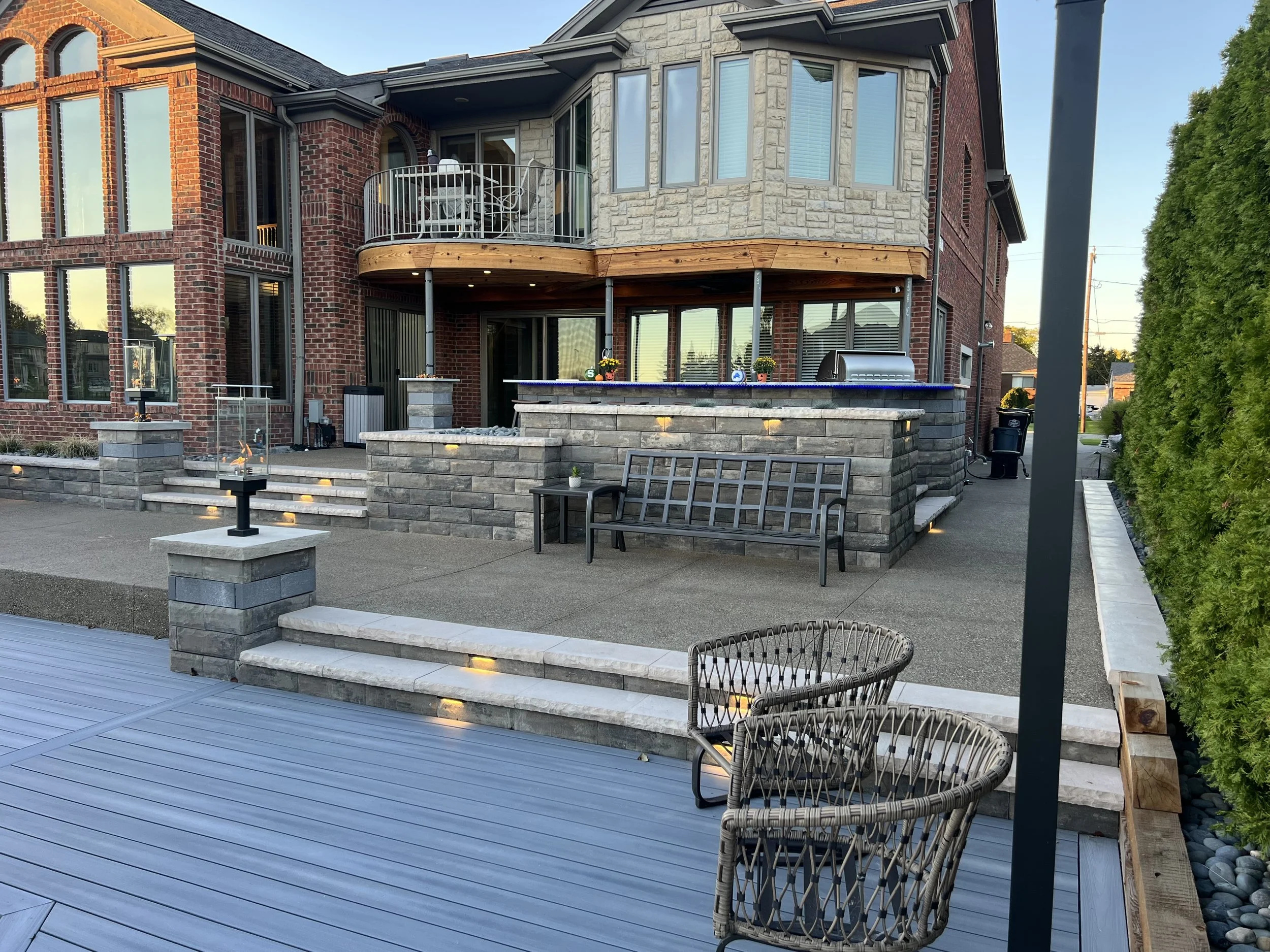
A deck is attached to your house. It shares a wall. It shares a roofline. On most properties, it is the single most visible outdoor feature from inside the home, which means you look at it every day, through every season, in every kind of light.
That visibility is what makes the quality of the build so important. A patio sits on the ground. A planting bed evolves over time. But a deck is a structure. It is framed, fastened, and finished in a way that is either right or not. And the difference between those two outcomes is almost always the deck builder, not the material.
There are contractors who build decks as one of a dozen things they offer. And there are deck builders who approach the project as a design opportunity, a structural challenge, and a piece of the larger outdoor living environment. The homeowner who understands the difference before signing a contract is the one who ends up with a deck that performs, looks intentional, and holds its value for years.
Related: How a Gazebo and Deck Builder in Rochester Hills, MI, Elevates Everyday Outdoor Living
Why Design Comes Before Framing
Most homeowners start the deck conversation with a size in mind. Twelve by sixteen. Fourteen by twenty. Some number they have seen online or heard from a neighbor. They bring that number to the deck builder and ask for a price.
The problem is that a deck sized by square footage alone misses everything that makes the space functional. How does the family actually use the outdoor space? Where does the sun hit in the afternoon? What direction does the wind come from across the property? Is the deck intended for dining, lounging, cooking, or all three? Does it need to accommodate stairs to the yard? A hot tub? A transition to a lower patio? A connection to a pool deck?
These are design questions. And they need to be answered before the framing plan is drawn, because every one of them affects the footprint, the layout, the railing configuration, and the way the deck integrates with the house and the landscape around it.
A deck builder who starts with design creates a space that responds to how the family lives. A contractor who starts with framing creates a platform that may or may not work once the furniture is in place and the first dinner party happens.
What Michigan's Climate Does to a Deck
Southeast Michigan is not a forgiving climate for anything built outside. The temperature swings are dramatic. Winter brings sustained freezing, heavy snow loads, ice accumulation, and de icing salt exposure on adjacent walkways and driveways. Summer delivers direct UV, humidity, and afternoon storms that saturate everything and then bake it dry the next day. And the freeze thaw cycle that runs from November through March is one of the most destructive forces any outdoor structure faces in this region.
A deck built for Oakland and Macomb counties needs to account for every one of those conditions. The material needs to handle UV without fading, moisture without warping, and temperature swings without cracking or splitting. The fasteners need to resist corrosion. The framing needs to be pressure treated and rated for ground contact where it is close to or embedded in the soil. And the footings need to be set below the frost line, which in this part of Michigan is 42 inches, to prevent heave that shifts the entire structure.
A deck builder who has been working in this climate understands these requirements because they have seen what happens when they are not met. Posts that heave. Boards that cup. Railings that loosen. Ledger connections that allow water behind the siding and into the house. Every one of these failures is preventable, and every one of them traces back to a decision that was made, or not made, during design and construction.
Material Options and What They Mean for Your Property
The material conversation is where most homeowners spend the majority of their research time. And the options have expanded significantly over the past decade.
Composite decking is the dominant choice in this market. Products from manufacturers like Trex, TimberTech, and Azek are engineered to resist fading, staining, mold, and moisture damage without requiring annual staining or sealing. They are available in a range of colors and grain patterns that closely mimic natural wood, and most carry manufacturer warranties of 25 years or more. For homeowners who want a low maintenance surface that holds its appearance through Michigan's seasons, composite is typically the right answer.
PVC decking is a step beyond composite. It contains no wood fiber, which makes it entirely impervious to moisture, mold, and insect damage. PVC boards are lighter than composite, which can affect the feel underfoot, but they are the most durable option available for properties where moisture exposure is constant, such as pool decks, lakefront properties, or elevated decks where the underside is exposed to weather.
Pressure treated lumber remains an option for homeowners who prefer the look and feel of real wood and are willing to commit to the maintenance it requires. Cedar and redwood offer natural beauty and decay resistance but come at a higher material cost and still require periodic treatment. Pressure treated pine is the most affordable framing and decking material, but it will need staining or sealing every one to two years to maintain its appearance and structural integrity in this climate.
The right material depends on the design intent, the maintenance commitment, the budget, and how the deck relates to the rest of the property. A deck builder who works across all of these materials can present the trade offs clearly and help the homeowner make a decision that aligns with their priorities.
Related: Luxury Deck Designs: Work With a Top Deck Builder in Bloomfield Township, MI
The Structural Details Nobody Sees
The surface of the deck gets all the attention. The color. The pattern. The railing style. The way it looks from the yard and from inside the house. But the structure underneath is what determines whether the deck performs for five years or twenty five.
A properly built deck in this climate requires attention to several structural elements that are invisible once the project is finished:
Footings set below the 42-inch frost line, poured on undisturbed soil or a compacted gravel pad, and sized to distribute the load of the deck without settling or shifting. In areas of Oakland and Macomb counties where the soil is heavy clay, footing design is especially important because clay expands and contracts with moisture changes and can exert lateral pressure on posts and piers.
A ledger board connection that is flashed, sealed, and fastened to the house framing with structural lag bolts or through bolts, not nails. The ledger is the point where the deck transfers its load to the house, and it is also the most common point of water intrusion. A ledger that is not properly flashed will allow moisture behind the siding, which leads to rot in the band joist and sheathing that can take years to become visible but costs thousands to repair.
Joist spacing and blocking that meets or exceeds code requirements for the span and the load. Joists that are spaced too far apart create a bouncy deck surface. Joists that are not blocked at bearing points can twist over time, which causes the deck boards above them to shift and create uneven surfaces.
Hardware and fasteners rated for the material and the environment. Composite and PVC decking require hidden fastener systems that allow the boards to expand and contract without visible screw heads on the surface. Framing hardware, joist hangers, post bases, and beam connectors should all be rated for contact with pressure treated lumber and resistant to corrosion in a climate that delivers moisture, salt, and freeze thaw cycling year after year.
These details are not glamorous. But they are the difference between a deck that holds up and one that does not. A deck builder who takes them seriously builds a structure that the homeowner never has to think about. A contractor who cuts corners on them builds a structure that will eventually demand attention, usually at the worst possible time.
How the Deck Connects to the Rest of the Outdoor Space
A deck that ends at the stairs and gives way to grass on all sides is a missed opportunity. On properties where the backyard includes a patio, a pool, a fire feature, or planting beds, the deck should connect to those elements in a way that creates a unified outdoor environment rather than a series of separate installations.
The details that create that connection are design decisions that need to be made alongside the deck layout, not after the framing is complete:
The transition from deck to patio should feel natural, with the materials complementing each other in tone and texture. The step height should be consistent and comfortable. And the drainage between the two surfaces should be planned so water does not pool at the base of the stairs or along the junction between the deck and the hardscape below.
Railings influence how the deck relates to the view and the surrounding landscape. A solid railing creates privacy and enclosure. A cable or glass panel railing preserves the sightline to the yard, the pool, or the landscape beyond. The railing style should be selected based on what the homeowner wants to see from the deck, not just what looks good on the deck itself.
Lighting integrated into the deck structure, including post cap lights, stair riser lights, and under rail lighting, makes the space usable after dark and creates a visual connection to the landscape lighting in the surrounding yard. A deck that glows softly in the evening invites use. A deck that disappears into darkness after sunset gets abandoned by 8 pm regardless of how well it was built.
Planting pockets and bed edges along the perimeter of the deck soften the structure and tie it into the landscape. A deck that is framed by mature plantings feels grounded. A deck that floats above bare lawn or mulch feels unfinished. The planting plan should be coordinated with the deck layout so that root zones, irrigation, and maintenance access are all accounted for.
When the deck, the patio, the plantings, and the lighting are planned together, the backyard reads as one space. That cohesion does not happen by accident. It happens because someone designed it that way.
The Deck You Build Is the One You Live With
A deck is not a temporary addition. It is a permanent structure that changes the way the home functions, the way the yard is used, and the way the property is perceived from the street and from the backyard. It is visible every day. It is used every season. And it is one of the first things a buyer notices if the home ever goes on the market.
The homeowners across Birmingham, Bloomfield Hills, Rochester Hills, Troy, Shelby Township, Washington Township, and West Bloomfield who end up happiest with their decks are the ones who treated the project the way they would treat any significant addition to the home. They started with the design. They chose a deck builder who understood the site, the climate, and the way the deck needed to work with the rest of the property. And they invested in the structural details that nobody sees but everyone benefits from.
If your property has been waiting for a deck, or if the one you have is past its useful life and no longer doing what it should, the starting point is not a material catalog. It is a conversation about the space. What works. What does not. What the family needs. And what the backyard could become with the right structure in place.
Because a deck is not just a platform. It is the bridge between the house and the yard. It is where mornings start and evenings end. And when it is designed and built by someone who treats it that way, it becomes the part of the property the family uses most.
That conversation is where the good decks start.
Related: Revolutionizing Yards in Troy and West Bloomfield Township, MI With Innovative Landscape Design
About the Author
When Russell Sheridan founded Legacy Landscape in 2013, he committed to completing every project to perfection and exceeding customer expectations. We continue that mission today, taking pride in designing and building luxurious landscapes where our customers can create special moments with loved ones.